

Growing a business online is not simply about getting more visitors. The real challenge is attracting the right audience, turning that attention into customers, and building a system that can support growth over time.
Two of the most common approaches are organic growth and paid growth. Organic growth focuses on earning visibility through channels such as search engines, content, social media, referrals, and email. Paid growth uses advertising and other paid distribution methods to reach a targeted audience.
So, organic growth vs paid growth—which is better for your business?
There is no universal winner. The right approach depends on your business model, budget, goals, competition, customer journey, and how quickly you need results. In many cases, businesses can benefit from using both strategies rather than treating them as completely separate choices.
This guide explains how organic and paid growth work, where each approach can be useful, what their limitations are, how their costs differ, and how to create a balanced growth strategy.
What Is Organic Growth?
Organic growth is the process of attracting visitors, leads, customers, or brand attention without paying directly for each individual click or impression.
Common organic growth channels include:
- Search engine optimization (SEO)
- Content marketing
- Organic social media
- Email marketing
- Word-of-mouth referrals
- Online communities
- Reviews and reputation
- Direct traffic
- Referral traffic
- Educational resources
For example, a business can publish a useful article that answers a question its potential customers are searching for. If the page earns visibility in search results, it can attract visitors without the business paying an advertising platform for every click.
That does not mean organic growth is free. Businesses still invest in writers, SEO specialists, designers, developers, software, research, and ongoing content improvements.
How Organic Growth Works
Organic growth usually develops through a series of connected activities:
- Identify customer needs and problems.
- Research relevant topics and search intent.
- Create genuinely useful content or experiences.
- Optimize pages for search engines and users.
- Build authority and brand recognition.
- Attract visitors through organic channels.
- Convert visitors into leads or customers.
- Analyze performance and improve existing assets.
The major difference from paid advertising is that the business is primarily earning attention rather than purchasing exposure.
What Is Paid Growth?
Paid growth uses advertising or other paid distribution methods to reach a selected audience.
Common examples include:
- Search advertising
- Shopping advertising
- Display advertising
- Social media advertising
- Video advertising
- Sponsored content
- Retargeting
- Paid influencer campaigns
- Lead-generation campaigns
For example, Google Ads allows advertisers to establish budgets and use different bidding approaches according to campaign objectives. Depending on the campaign, businesses can optimize toward goals such as clicks, conversions, impressions, or views.
Paid growth can provide businesses with greater control over when and where promotional messages appear.
However, paying for traffic does not automatically make that traffic valuable. The quality of the audience, offer, landing page, conversion process, and tracking system still matters.
How Paid Growth Works
A typical paid growth process looks like this:
- Define a business objective.
- Identify the target audience.
- Select an advertising platform.
- Create advertisements and landing pages.
- Set a budget and bidding strategy.
- Launch the campaign.
- Measure clicks, conversions, revenue, and other relevant metrics.
- Improve targeting, messaging, creative, and landing experiences.
The goal is not simply to buy more traffic. It is to acquire valuable customers efficiently.
Organic Growth vs Paid Growth: Key Differences
The two approaches differ mainly in how they acquire attention and how businesses invest resources.
These differences do not mean one strategy is automatically better. They simply show why businesses may use them for different purposes.
Benefits of Organic Growth
1. It Can Build Long-Term Visibility
One of the biggest advantages of organic growth is the ability to create digital assets that may continue producing value after their initial publication.
A useful article, guide, product page, tutorial, or resource can continue attracting visitors when it remains relevant and visible.
Organic visibility is not permanent, however. Search results, competition, user behavior, algorithms, and market conditions can change. Successful organic growth therefore requires ongoing improvement.
2. It Can Strengthen Brand Authority
Useful content can help a business demonstrate knowledge and experience.
For example, a financial software company might publish practical resources about budgeting, invoicing, cash flow, and business reporting.
Someone who discovers that content may become familiar with the brand before they are ready to purchase.
3. It Can Diversify Customer Acquisition
Businesses that rely entirely on advertising may become highly dependent on their advertising budget.
Organic channels can provide additional sources of visitors and customers through search, referrals, content, email, social media, and brand recognition.
4. It Supports Different Stages of the Customer Journey
Organic content can address different customer needs.
A person might first discover an educational article, then read a comparison guide, visit a product page, subscribe to an email list, and eventually become a customer.
This makes organic content useful beyond simple traffic generation.
Limitations of Organic Growth
Organic growth has important limitations that businesses should understand before relying on it as their only acquisition channel.
It Usually Takes Time
SEO, content marketing, and brand building generally require consistent effort.
A new website may need time to create useful resources, establish topical relevance, improve technical SEO, earn recognition, and compete with established websites.
Results Are Not Guaranteed
Publishing content does not guarantee search rankings or traffic.
Performance can depend on relevance, content quality, competition, technical accessibility, search intent, authority, and many other factors.
It Requires Consistent Investment
Although organic traffic does not normally involve paying an advertising platform for each click, businesses still need resources to create, optimize, update, and distribute content.
Benefits of Paid Growth
1. It Can Generate Exposure Quickly
Paid advertising can put a business in front of potential customers without waiting for a new page to establish organic visibility.
This can be useful for:
- Product launches
- Seasonal promotions
- Events
- New services
- Limited-time offers
- Market testing
- Lead-generation campaigns
2. It Provides Campaign Controls
Advertising platforms generally provide controls that can help marketers manage campaigns according to their objectives.
Depending on the platform, businesses may be able to control:
- Budget
- Audience
- Keywords
- Locations
- Devices
- Scheduling
- Ad creative
- Landing pages
- Conversion objectives
This makes paid advertising useful when a business has a clearly defined target audience and measurable goal.
3. It Can Support Faster Testing
Paid campaigns can help businesses test different:
- Headlines
- Offers
- Calls to action
- Audience segments
- Landing pages
- Product messages
The resulting data can help marketers understand which combinations generate meaningful responses.
Paid testing should still be interpreted carefully because advertising performance can change according to targeting, competition, budget, seasonality, and other conditions.
4. It Can Support Specific Business Objectives
Paid campaigns can be designed around different outcomes, including traffic, leads, sales, impressions, or video views.
The important step is selecting a campaign objective that matches the actual business goal.
Limitations of Paid Growth
1. It Requires Ongoing Spending
Paid advertising requires a budget.
When a campaign stops, the advertising exposure associated with that campaign can also stop.
This makes paid growth different from an organic asset that may continue attracting visitors after the initial work.
2. Poor Campaigns Can Waste Money
A campaign can receive clicks without producing enough business value.
Common problems include:
- Poor audience targeting
- Weak commercial intent
- Unclear messaging
- An unattractive offer
- Poor landing-page experience
- Slow website performance
- Complicated checkout
- Incorrect conversion tracking
More clicks do not necessarily mean more customers.
3. Advertising Costs Can Change
Advertising markets are competitive, and campaign costs can vary according to factors such as audience demand, competition, targeting, platform, and time period.
Businesses should therefore monitor actual acquisition costs rather than assuming that a campaign will always perform at the same level.
Organic Growth vs Paid Growth: Which Costs More?
There is no fixed answer.
Organic growth may involve spending on:
- Content creation
- SEO
- Research
- Design
- Development
- SEO software
- Outreach
- Social media management
Paid growth may involve:
- Advertising spend
- Creative production
- Campaign management
- Landing-page development
- Analytics and tracking
- Agency or freelancer costs
The more useful comparison is not simply “Which has the lower cost?”
Instead, businesses should ask:
How much does it cost to acquire a customer, and what value does that customer generate?
A channel with inexpensive traffic can still be inefficient if visitors rarely convert. Similarly, a more expensive acquisition channel may make sense if it consistently generates valuable customers.
Organic Growth vs Paid Growth for Small Businesses
Small businesses often have limited marketing resources, so they need to prioritize carefully.
Organic growth can be useful for businesses with:
- Limited advertising budgets
- Strong industry expertise
- A specific niche
- Valuable educational content
- A longer buying cycle
- Customers who actively research before purchasing
Paid growth can be useful when a business:
- Has a validated offer
- Needs faster exposure
- Can measure conversions accurately
- Has sufficient margins
- Wants to test demand
- Has a clearly defined audience
A small business does not necessarily have to choose one strategy permanently.
It can build organic assets while using paid advertising selectively for important campaigns.
Organic Growth vs Paid Growth for E-Commerce
E-commerce businesses can use both approaches throughout the customer journey.
Organic E-Commerce Strategies
Useful organic strategies include:
- Product-page SEO
- Category-page optimization
- Buying guides
- Product comparisons
- Educational content
- Organic social media
- Email marketing
- Internal linking
- Search-focused content
Paid E-Commerce Strategies
Paid strategies can include:
- Search advertising
- Shopping campaigns
- Social media advertising
- Retargeting
- Product promotion
- Seasonal campaigns
For e-commerce businesses, traffic is only one part of the equation.
Product presentation, pricing, shipping information, trust signals, mobile usability, payment options, and checkout experience can all influence the final purchase decision.
Organic Growth vs Paid Growth for New Websites
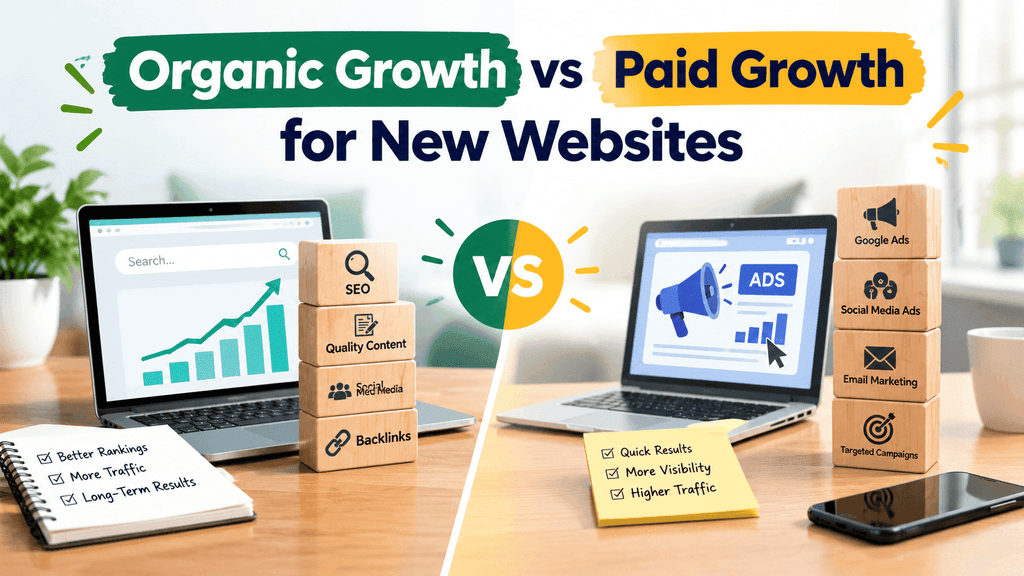
New websites often face a difficult challenge: they need traffic and customers, but their organic visibility may still be developing.
Paid advertising can potentially provide earlier exposure while the website builds its organic foundation.
At the same time, relying entirely on paid traffic can become expensive if the website has a weak offer or poor conversion experience.
A balanced approach can include:
- Setting up accurate analytics and conversion tracking.
- Building important service, product, and informational pages.
- Establishing a technical SEO foundation.
- Testing carefully selected paid campaigns.
- Measuring conversions rather than clicks alone.
- Improving landing pages based on user behavior.
- Using successful campaign insights to strengthen organic content.
When Should You Focus on Organic Growth?
Organic growth may deserve greater attention when your business wants to build long-term visibility and authority.
Long-Term Search Visibility
SEO can help businesses reach people who are actively searching for information, solutions, products, or services.
Expertise-Based Marketing
If your business has valuable knowledge, publishing genuinely useful content can help demonstrate that expertise.
Reduced Dependence on Advertising
A strong organic acquisition system can diversify your traffic sources.
Informational Search Demand
Businesses whose customers spend significant time researching before purchasing may benefit from creating content that answers those questions.
When Should You Use Paid Growth?
Paid growth may be particularly useful when speed, targeting, or campaign control is important.
Time-Sensitive Promotions
Paid advertising can support promotions that have a defined start and end date.
New Product Testing
Advertising can help a business test audience response to a new product or offer.
Targeted Customer Acquisition
Paid platforms can provide targeting options that allow businesses to focus campaigns on selected audiences and contexts.
Campaign-Specific Goals
Paid growth can be useful when a business needs to drive a specific measurable action, such as generating leads or promoting a product.
Why Businesses Can Combine Organic and Paid Growth
The organic-versus-paid debate can make these strategies appear like competing choices.
In practice, they can complement each other.
Organic growth can build long-term assets such as:
- Search visibility
- Content libraries
- Brand recognition
- Email audiences
- Referral relationships
- Community trust
Paid growth can provide controlled distribution for:
- Product launches
- Promotions
- Audience testing
- Lead generation
- Seasonal demand
- High-priority campaigns
The two channels can also provide useful information for each other.
For example, paid campaigns may reveal which messages or offers generate strong responses. Those insights can help shape future content and landing pages.
Similarly, successful organic content can provide ideas for advertising campaigns.
How to Build a Balanced Growth Strategy
A balanced strategy starts with business objectives rather than choosing a channel simply because it is popular.
Step 1: Define Your Business Goal
First, determine what you actually want to achieve.
Possible goals include:
- Increasing sales
- Generating qualified leads
- Increasing brand awareness
- Growing an email list
- Launching a product
- Entering a new market
- Increasing customer retention
Different goals can require different acquisition strategies.
Step 2: Understand Your Customers
Study how your customers discover, evaluate, and purchase products or services.
Ask:
- What problems are they trying to solve?
- What do they search for?
- Where do they spend time online?
- How long does the buying process take?
- What questions do they ask?
- What objections prevent them from purchasing?
The answers can help determine where organic and paid channels fit.
Step 3: Calculate Your Acquisition Economics
Do not judge marketing performance by traffic alone.
Track relevant metrics such as:
- Customer acquisition cost
- Conversion rate
- Average order value
- Customer lifetime value
- Revenue per visitor
- Return on advertising spend
- Lead-to-customer rate
These metrics provide a clearer picture of whether a channel is contributing to business growth.
Step 4: Improve the Conversion Experience
Before increasing traffic, make sure your website can convert that traffic effectively.
Review:
- Landing pages
- Product pages
- Calls to action
- Forms
- Mobile usability
- Checkout
- Navigation
- Trust signals
- Website performance
Sending more visitors to a weak conversion experience will not solve the underlying problem.
Step 5: Create Useful Organic Content
Build content around genuine customer needs.
Depending on the business, this might include:
- Tutorials
- Guides
- Comparisons
- Case studies
- FAQs
- Product education
- Service pages
- Industry resources
The goal should be to provide useful information rather than publish content simply to increase the number of pages on a website.
Step 6: Test Paid Campaigns Carefully
When using paid advertising, begin with a clear objective and measurable conversion event.
Do not judge campaign success only by impressions or clicks.
Look at what visitors do after they arrive.
Step 7: Measure, Learn, and Improve
Marketing strategies should evolve as new information becomes available.
Regularly review:
- Which channels attract qualified visitors?
- Which pages generate conversions?
- Which campaigns produce customers?
- Which content attracts the right audience?
- Where do visitors leave?
- Which audiences have the strongest customer value?
Use the findings to improve both organic and paid activities.
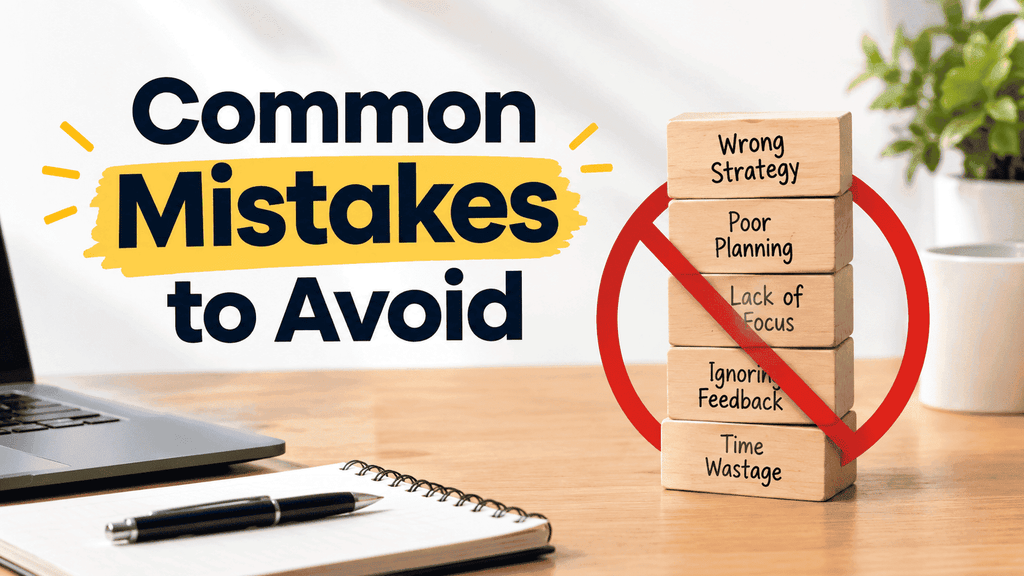
Common Mistakes to Avoid
Treating Organic Traffic as Completely Free
Organic traffic may not have a direct cost per click, but building organic visibility requires time, expertise, content, tools, and maintenance.
Assuming Paid Advertising Guarantees Sales
Advertising can create exposure, but it cannot guarantee that visitors will purchase.
The offer, landing page, product, pricing, trust, and customer experience all matter.
Focusing Only on Traffic
Traffic is an important metric, but it is not the final business outcome.
Qualified leads, conversions, revenue, customer value, and retention can provide more meaningful insights.
Abandoning SEO Too Early
Organic growth can take time. Businesses should avoid judging an entire organic strategy based on a small number of pages or a very short period.
Running Ads Without Proper Tracking
Without reliable conversion tracking, businesses may struggle to determine which campaigns are producing meaningful business outcomes.
Sending Every Paid Visitor to the Homepage
A dedicated landing page can often provide a more relevant experience by matching the advertisement’s message and offer.
A Practical Example
Imagine an online company that sells accounting software to small businesses.
The company could build organic visibility by publishing:
- Small business accounting guides
- Cash-flow management tutorials
- Invoicing resources
- Accounting software comparisons
- Business budgeting guides
At the same time, it could run paid campaigns around relevant high-intent searches and specific promotional offers.
Organic content can help people during the research stage, while paid campaigns can provide targeted exposure for people who are closer to taking action.
The company can then measure which content, offers, audiences, and landing pages generate valuable customers.
This creates a more connected growth system instead of treating every marketing channel as an isolated activity.
The Long-Term Perspective
The most useful way to think about organic and paid growth is to understand what each strategy contributes.
Organic growth can help build long-term digital assets.
Paid growth can provide controlled access to advertising distribution.
Neither approach removes the need for:
- A strong product or service
- A clear value proposition
- A relevant audience
- A good customer experience
- Accurate measurement
- Continuous improvement
A business can have excellent advertising and still struggle if its website does not convert visitors.
Likewise, a business can create excellent content but fail to generate enough revenue if it has no clear conversion path.
Sustainable growth requires connecting visibility, trust, conversion, and retention.
Frequently Asked Questions
Is organic growth better than paid growth?
Neither approach is universally better. Organic growth can support long-term visibility and audience building, while paid growth can provide faster exposure and targeted campaign distribution. The appropriate balance depends on the business, budget, audience, and objectives.
Is organic growth cheaper than paid growth?
Not necessarily. Organic growth may avoid a direct advertising cost for every visitor, but it requires investment in content, SEO, people, tools, and maintenance. Paid growth requires advertising expenditure and campaign management.
How long does organic growth take?
There is no universal timeline. Results can depend on competition, website authority, content quality, search demand, technical SEO, and consistency. Organic growth should generally be viewed as a long-term process rather than a guaranteed quick result.
Can a business use organic and paid growth together?
Yes. Businesses can use organic channels to build long-term visibility while using paid campaigns for targeted promotions, testing, launches, or additional customer acquisition.
Is paid advertising suitable for a new business?
It can be useful when a business has a clearly defined offer, measurable objectives, appropriate tracking, and enough budget to test campaigns responsibly.
Should I invest in SEO before paid advertising?
It depends on your objectives and resources. SEO can support long-term organic visibility, while paid advertising can provide faster exposure. Many businesses can work on both if they have the resources to manage and measure them properly.
What is more important: traffic or conversions?
For a commercial website, conversions and business outcomes are generally more meaningful than traffic alone. A smaller number of qualified visitors can be more valuable than a large amount of poorly qualified traffic.
Conclusion
Organic growth vs paid growth is not simply a choice between two competing marketing methods. Each approach has different strengths, costs, timelines, and applications.
Organic growth can help businesses build search visibility, useful content, brand authority, and diversified acquisition channels over time.
Paid growth can help businesses reach targeted audiences, support time-sensitive campaigns, test offers, and generate exposure without waiting for organic visibility to develop.
For many businesses, the most practical strategy is not to rely exclusively on one channel. Instead, use organic and paid growth according to their strengths, measure the business results they produce, and continuously improve the customer journey.
The key question is therefore not “Which strategy is always better?”
It is:
“Which combination of organic and paid growth can help my business attract the right customers and turn that attention into sustainable business results?”
That is the foundation of a stronger digital growth strategy.